Engineered for Performance. Designed for Pilates Excellence.


How to Design a Professional Pilates Studio: Equipment and Layout Guide
Release time:
2026-09-28
Author:
Source:
Opening a Pilates studio requires more than choosing high-quality equipment. A practical Pilates studio layout can improve training efficiency, instructor movement, customer experience, and future business growth.
Whether you are opening a small boutique studio or a larger commercial facility, careful planning can help you make better use of your available space.
1. Start With Your Studio Space
Before purchasing equipment, measure the actual usable floor area.
Consider:
- Room length and width
- Ceiling height
- Doors and entrances
- Windows and columns
- Storage areas
- Emergency exits
- Customer reception area
Create a simple floor plan before deciding how many Pilates machines to purchase.
2. Choose the Core Pilates Equipment
A professional Pilates studio does not necessarily need every type of equipment from day one.
A basic equipment setup may include:
- Pilates Reformers
- Pilates Chairs
- Pilates Towers
- Cadillacs
- Ladder Barrels
- Pilates accessories
The Reformer is often the central piece of equipment, while other products can expand exercise options and support different class formats.
3. Plan Enough Space Around Each Reformer
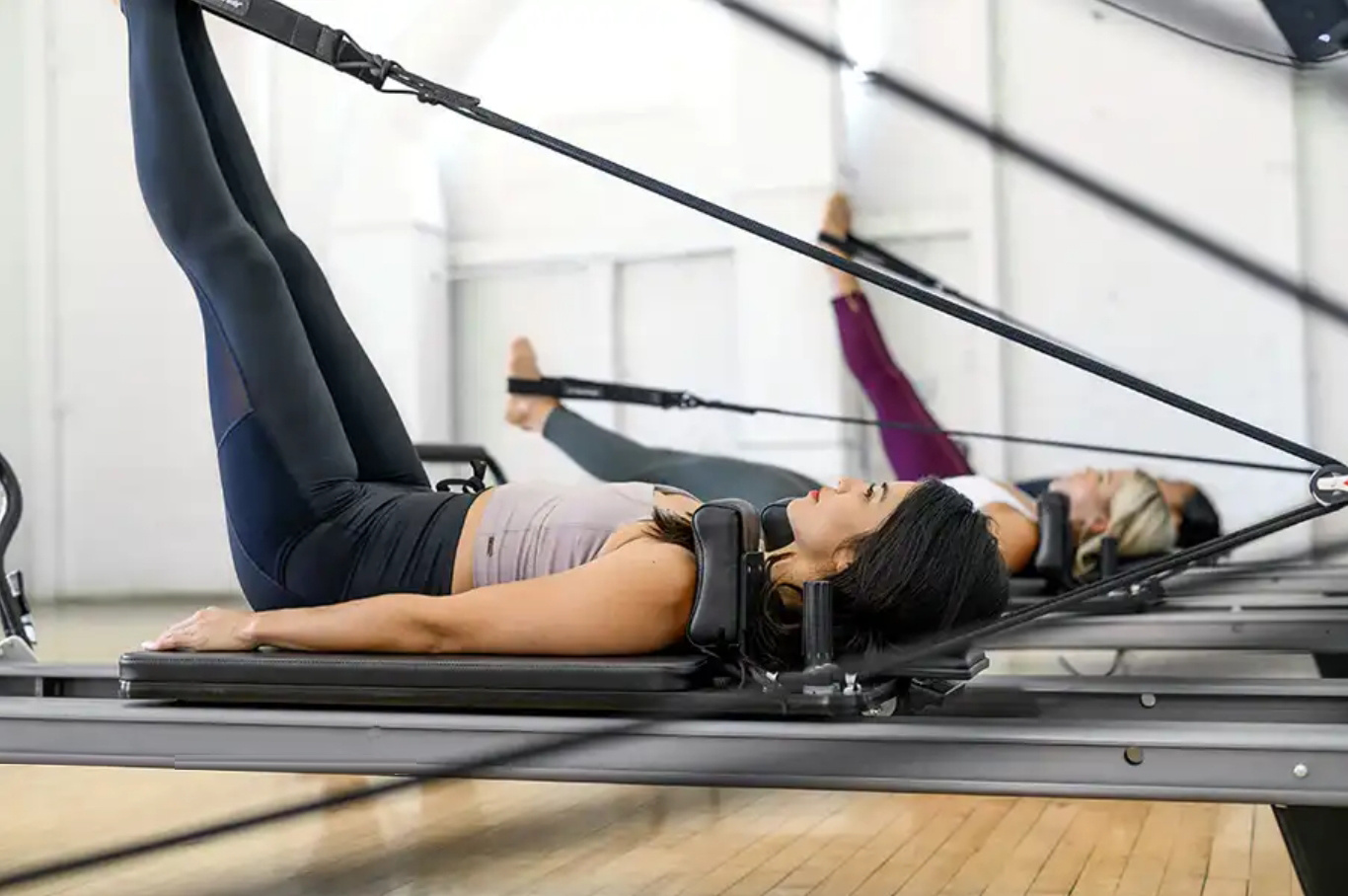
When arranging multiple Reformers, avoid placing machines too close together.
In addition to the equipment footprint, allow sufficient space for:
- User movement
- Instructor demonstrations
- Mounting and dismounting
- Stretching exercises
- Equipment adjustment
- Cleaning and maintenance
The ideal layout depends on the room dimensions and equipment specifications, so always use the manufacturer's actual measurements when planning.
4. Consider Studio Traffic Flow
A professional studio should have a logical movement path.
Customers should be able to enter, store personal belongings, reach their equipment, and leave the training area without unnecessary obstacles.
Keep frequently used accessories within easy reach while maintaining clear walking areas.
Good traffic flow can make a small studio feel more organized and comfortable.
5. Think About Equipment Style
The visual design of Pilates equipment can influence the overall atmosphere of your studio.
Wooden Reformers can create a warm and natural appearance, while aluminum Reformers can provide a modern and minimalist look.
You can also consider:
- Custom colors
- Upholstery options
- Studio logo
- Matching equipment
- Brand design
For studios building a distinctive identity, OEM and custom Pilates equipment can help create a consistent visual style.
6. Leave Space for Future Expansion
Avoid filling every available square meter immediately.
If your business grows, you may want to add more Reformers, Chairs, Towers, or accessories.
A flexible layout allows you to expand your equipment collection without completely redesigning the studio.
7. Choose a Reliable Pilates Equipment Manufacturer
The equipment supplier can also affect your studio planning.
A professional manufacturer should provide accurate information about:
- Product dimensions
- Package dimensions
- Gross weight
- Installation requirements
- Available customization
- Spare parts
- Production lead time
- Shipping options
At Micon Fitness, we manufacture professional Pilates equipment for studios, gyms, hotels, distributors, and private-label businesses.
Our product range includes Reformers, Cadillacs, Towers, Pilates Chairs, Ladder Barrels, and other Pilates equipment. We also support OEM and ODM customization, including colors, logos, materials, and product configurations.
8. Create a Practical Equipment Budget
Don't calculate your budget based only on the equipment unit price.
Your total investment may also include:
- Shipping
- Import costs
- Installation
- Accessories
- Spare parts
- Studio renovation
- Storage solutions
Comparing the complete landed cost can give you a clearer picture of your actual investment.
Final Thoughts
A successful Pilates studio starts with smart planning. Before purchasing equipment, evaluate your space, target customers, class format, equipment mix, budget, and future expansion plans.
A well-designed layout combined with reliable Pilates equipment can create a professional environment while making better use of your investment.
关键词:
Primary Keywords: Pilates studio layout, Pilates studio equipment, how to design a Pilates studio Secondary Keywords: professional Pilates studio, Pilates Reformer studio, commercial Pilates equipment, Pilates studio design, Pilates equipment manufacturer Long-Tail Keywords: how to design a Pilates studio layout, how much space does a Pilates studio need, what equipment does a Pilates studio need, Pilates studio equipment planning, best layout for a Pilates Reformer studio
Recommended News




Wechat:+86 13053433933
Innovation and Technology Park, Ningjin County, Shandong Province, China